



Sahel Stripe
SL3-11
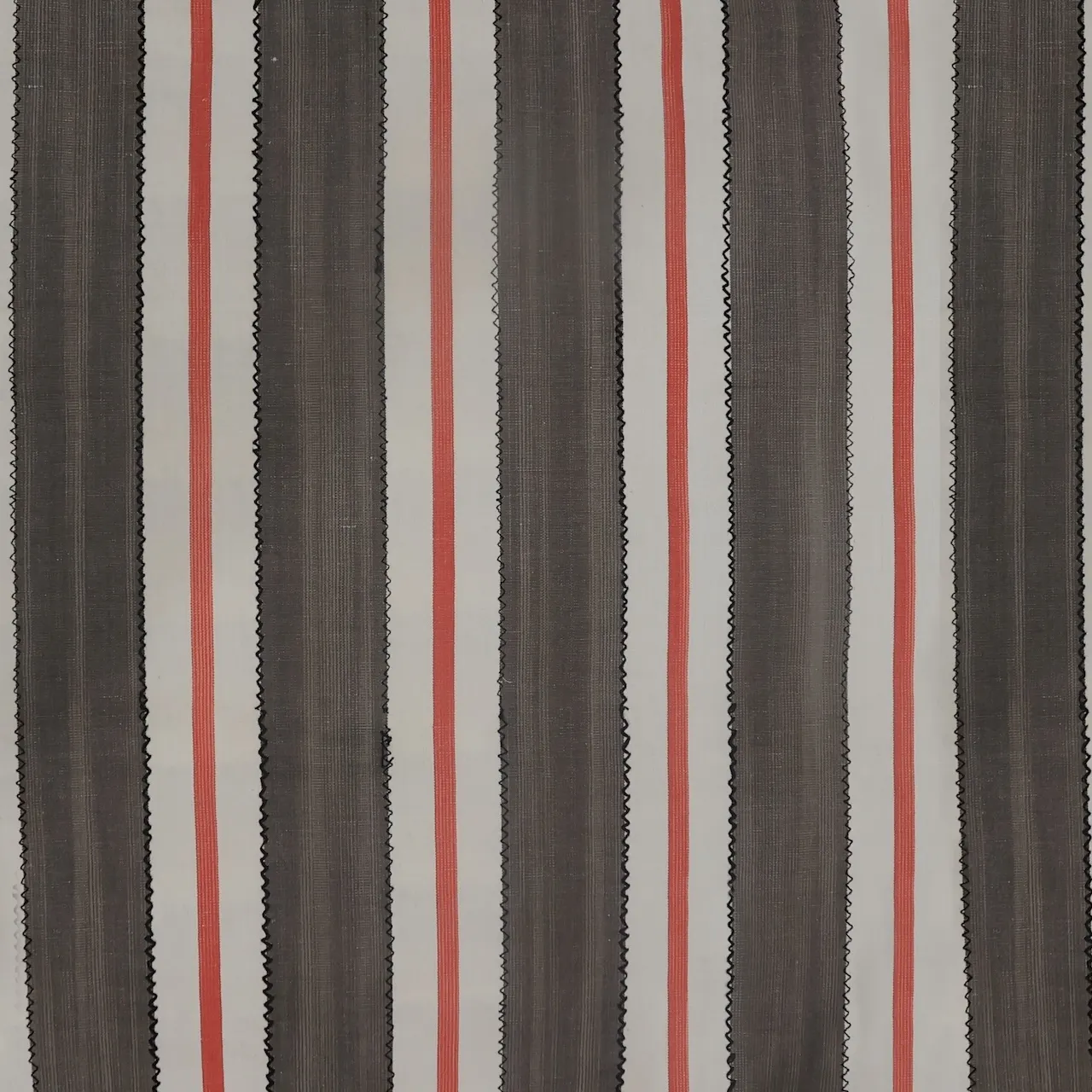
Based on an early 20th-century robe from Tunisia’s Sahel coast, Sahel Stripe preserves the quiet architecture of its narrow-loom origins. Traditional cloths from Mahdia and Kairouan were woven in slim panels, typically 8–15 cm wide, and joined by hand—each seam visible, a rhythmic trace of the maker’s labor.
Here, unevenly dyed cotton warps introduce soft tonal variation, while linen in the weft lends structure and breath. Broad bands of charcoal and ivory are crossed by coral lines, echoing the pieced stripes of the original robe. The result carries the humility and precision of a cloth built by hand—measured, enduring, and luminous in its restraint.
- Collection: Out Of Many, One.
- Color: Charcoal & Coral
- Width: 134.5 cm / 52.95 in
-
Pattern Repeat:
Vertical
 : N/A
Horizontal
: N/A
Horizontal
 : 11.2 cm / 4.40 in
- Weight: 275 gsm
- Content: 60% Cotton + 40% Linen
- Care Instruction: Dry Clean Only
- Martindale: 14,000
- Style: Stripes
- Fiber: Cotton, Linen
- Culture: Tunisian
- Type: Woven
- Collection: Out of Many, One
Story
Based on an early 20th-century robe from Tunisia’s Sahel coast, Sahel Stripe preserves the quiet architecture of its narrow-loom origins. Traditional cloths from Mahdia and Kairouan were woven in slim panels, typically 8–15 cm wide, and joined by hand—each seam visible, a rhythmic trace of the maker’s labor.
Here, unevenly dyed cotton warps introduce soft tonal variation, while linen in the weft lends structure and breath. Broad bands of charcoal and ivory are crossed by coral lines, echoing the pieced stripes of the original robe. The result carries the humility and precision of a cloth built by hand—measured, enduring, and luminous in its restraint.
Technical
- Collection: Out Of Many, One.
- Color: Charcoal & Coral
- Width: 134.5 cm / 52.95 in
-
Pattern Repeat:
Vertical: N/A
Horizontal
: 11.2 cm / 4.40 in
- Weight: 275 gsm
- Content: 60% Cotton + 40% Linen
- Care Instruction: Dry Clean Only
- Martindale: 14,000
- Style: Stripes
- Fiber: Cotton, Linen
- Culture: Tunisian
- Type: Woven
- Collection: Out of Many, One

Item has been added
to your basket!